
How to write a work list and caption your images
By the end of this you will be able to write a work list, caption an image so it can stand alone, and send both to a gallery without anything falling out of sequence.
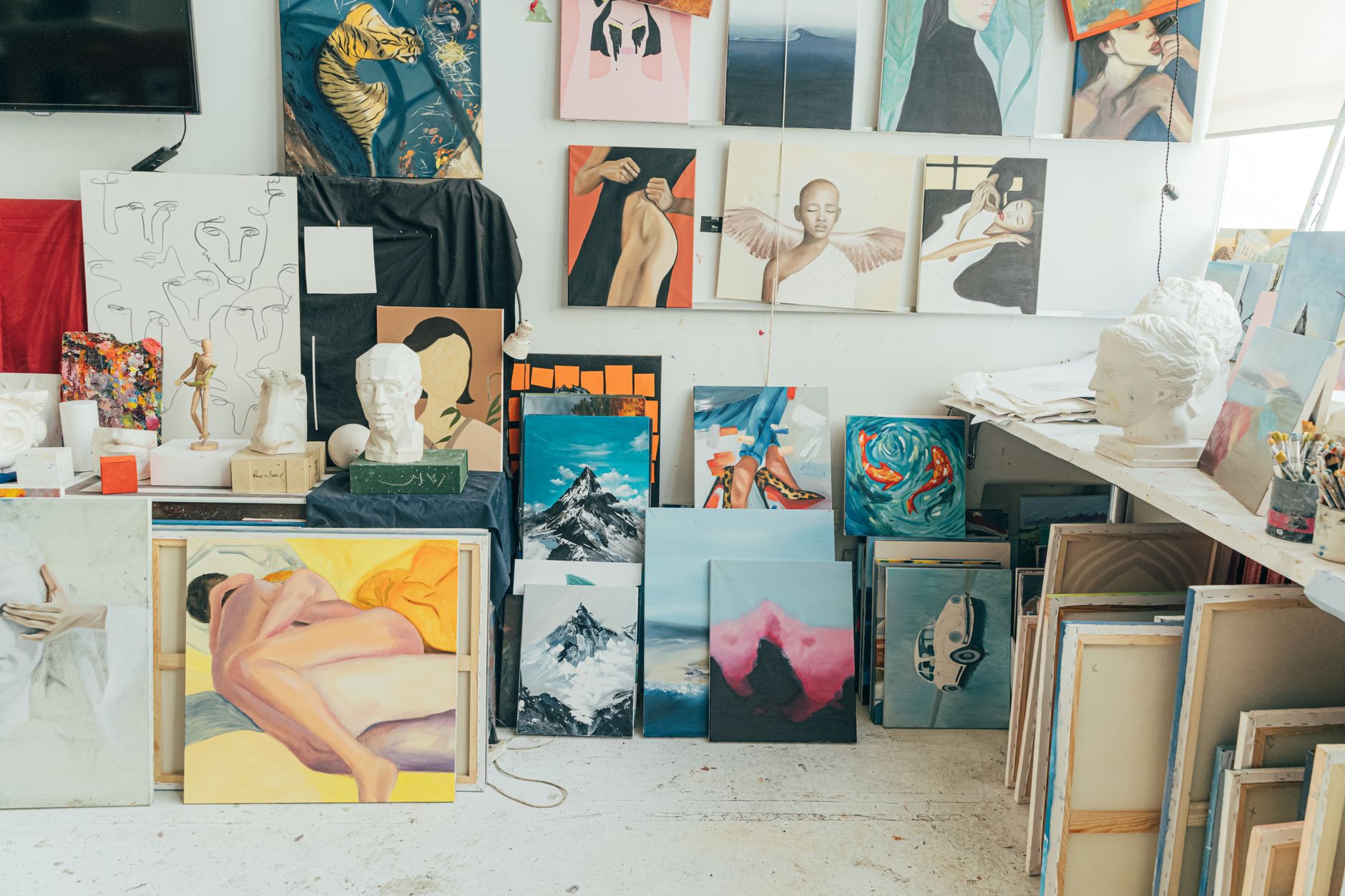
A work list is a numbered record of the works you are showing or submitting, one line each, in a fixed order: artist, title, year, medium, dimensions, edition, price or insurance value. A caption repeats that line beside the image. The numbers on your image files must match the numbers on the list.
What is a work list?
A work list is a single document that says what the works are. One line per work, numbered, in a consistent order. Galleries sometimes call it a list of works or a checklist, and an open call will usually just call it a work list or an image list. It travels with your images, your proposal, your loan agreement and, eventually, your invoice.
It exists because an image on its own says almost nothing reliable. A photograph of a painting cannot tell you whether it is forty centimetres or four metres, whether the surface is oil or acrylic, whether it was made last spring or nine years ago. The list carries all of that. The image carries the look of the thing.
The most useful habit is to write the line the day the work is finished, while it is still in front of you. Measure it before it is wrapped. A canvas that leaves the studio unmeasured tends to stay unmeasured, and the number you guess at two years later will be the number that ends up on a wall label.
In what order do you write artwork details?
Artist, title, year, medium, dimensions, edition, price or value. That sequence is close to universal across galleries, museums, art fairs and open calls, and it is worth following even when nobody has asked you to, because it is the order the reader's eye expects.
| Field | What goes in it | Example |
|---|---|---|
| Artist | Your name, spelled and formatted the same way every time | Maja Lind |
| Title | The title as given. Italicised in print. An untitled work takes a descriptor in brackets, not italicised | Low Tide, February or Untitled (Harbour) |
| Year | The year the work was completed. A work made over several years takes a span, 2022 to 2024 | 2024 |
| Medium | Materials first, then what they sit on | Oil and beeswax on linen |
| Dimensions | Height, then width, then depth. Units stated. Unframed unless you say otherwise | 120 x 90 cm |
| Edition | Which number, out of how many, plus any proofs | 3/25, plus 3 artist's proofs |
| Price or value | Retail price including the gallery's share, or insurance value if the work is not for sale | £2,400 |
A few conventions sit underneath that table. Height before width is the standard across cataloguing practice, including the Getty's Categories for the Description of Works of Art, so 120 x 90 cm means a portrait format. Say centimetres or inches rather than assuming. For works on paper, state whether you are giving the sheet size, meaning the full piece of paper, or the image size, meaning only the printed or drawn area. For video and sound, duration replaces dimensions. For anything installed, give the dimensions of the component parts and add that the overall size is variable, if it is.
Edition means a set of identical works made from the same matrix or mould, numbered in sequence. An artist's proof is a copy held back from the numbered run, traditionally for the artist, and it is counted separately. If a work is unique, write unique rather than leaving the field blank. A blank field reads as an oversight.
For a solo submission you can put your name once at the top and leave it off each line. For a group context, keep it on every line. Lists get split apart.
How do you caption images in a submission?
A caption is the work list line placed beside the image it describes. The work is captioning them in the right order, and the failure almost everyone has made at least once is that image file four does not correspond to line four of the list. A selection panel looking at a mismatched set does not conclude that the files are out of order. It concludes that the sculpture is the painting.
- Decide the order of the works first, before you touch a file name. The order is an editorial decision and it should be yours.
- Number the work list from 01. Two digits, so that 10 does not sort above 2.
- Rename every image file so the number comes first:
01_Lind_LowTide_2024.jpg. Surname next is useful once your files are sitting in a folder with thirty other artists. - Keep caption text in the document, not burned into the image. A panel wants a clean image and a readable list, not type across the corner of your painting.
- For a second view of the same work, use 03a and 03b rather than a new number, and say which is which: detail, verso, installation view.
- Export at the size and format the brief asks for. If it specifies a longest edge in pixels, a maximum file size or a colour profile, follow it exactly. Files that fail an upload are sometimes read as files that failed to arrive.
- Read line seven, then open file seven. Then do it again from the bottom of the list upwards. It takes four minutes and it is the only check that catches a shifted sequence.
An image list is the same thing seen from the other side: a document keyed to the image files rather than to the works, used when the images are sent as separate files rather than placed in a PDF. The content is identical. If a call asks for an image list and you send a work list with matching numbers, nobody will mind.
If the photographs themselves are the weak link, that is a separate problem with a separate fix, and it is worth solving before the captions. See how to photograph your artwork properly.
Should a work list include the price?
Include a price when the context is commercial, and an insurance value when it is not. Open calls for selling exhibitions, such as the Royal Academy Summer Exhibition, ask for a price at the point of entry. Galleries preparing a show need prices early, because the list becomes the price list on the desk.
Quote the retail price, meaning the figure a buyer pays, with the gallery's commission already inside it. Commission is the percentage the gallery keeps from a sale, commonly around half in the UK and Europe, agreed in advance. Quoting your studio price to a gallery and letting them add their share on top produces two different numbers for the same painting, which is a difficult thing to undo.
Where a work is lent rather than sold, give an insurance value: what it would cost to replace or to compensate you for the loss. For a residency, a non-selling show or a public commission, that figure is what the insurer works from, and it is the only money that appears on the list. Mark anything unavailable as NFS, not for sale.
Keep price in its own column in your own records, so you can remove it in one action. The same list goes to a curator, a framer, a shipper and an accountant, and only some of them need the number.
How do you caption a work that is part of a series?
Put the series name first, then the individual work, then the sequence. Harbour Studies (no. 4), 2024. Or, where the works have their own titles, Low Tide, February, from the series Harbour Studies. Both are readable. What matters is choosing one and holding it across every document, because a series captioned three different ways in three places becomes three series in the record.
A work in several parts is different from a work in a series. A diptych is one work, so it takes one line and one number, with the dimensions given for each panel and then overall. Two paintings hung together that could be sold apart are two works and two lines.
Series also expose the limits of a flat list. Once there are forty studies with the same title and a different number, the order you wrote them in is the only thing holding them apart, and a spreadsheet will do that until it won't. Spreadsheet or art cataloguing software looks at where that line falls.
How do you keep this from becoming admin?
Write the record once and reuse it. The reason a work list feels like paperwork is that most artists write it from scratch each time a deadline arrives, reconstructing dimensions from memory and hunting for the photograph on an old phone. Written at the point of making, it is a two minute job per work and it is never done again.
The seven fields in the caption order are the same seven fields a complete studio record needs, which is not a coincidence. Record them once per work, with the image attached, and every subsequent list is an export rather than an act of archaeology. How to catalogue your artwork covers the wider record: where works are, who holds them, what sold.
Samlio stores those fields in that order, for the plain reason that it is the order the rest of the art world reads in. But the order matters more than the tool. A notebook kept properly will outlast a database kept badly.
In short
- Artist, title, year, medium, dimensions, edition, price or value: that order is close to universal, and worth following even when nobody asks for it.
- Height before width is the standard, so 120 x 90 cm reads as a portrait format without further explanation.
- Number both the list and the image files from 01, then read the list backwards against the files to catch a shifted sequence.
- Quote the price a buyer pays, with the gallery's share already inside it, and give an insurance value where the work is not for sale.
- Measure the work before it is wrapped, because a canvas that leaves the studio unmeasured usually stays that way.
Questions people ask next
- Do I italicise the title in a work list?
- Yes, in anything that will be printed or read as prose, including captions, wall labels and press material. In a plain spreadsheet or a web form that strips formatting, type the title without italics rather than adding quotation marks. Keep the choice consistent across the document.
- Should dimensions be framed or unframed?
- Give unframed dimensions as standard, since that is the size of the work itself. Add the framed size separately where it matters, which is usually for shipping, hanging plans and insurance. Label both clearly so nobody has to guess which is which.
- What do I write if I cannot remember the year a work was made?
- Write the year you are confident about, or a span if the work was made over a period. Do not invent a date to fill the field. An approximate date marked as approximate is honest and usable, while a wrong date quietly becomes permanent once it appears in a catalogue.
- How many images should I send per work?
- One full view per work unless the call allows more, and a single detail only where the surface genuinely cannot be read at full size. Panels looking at a hundred submissions give each one a short span of attention, and three views of the same painting spends it on repetition.
Sources
- Categories for the Description of Works of Art (CDWA), Getty Research Institute, Supports the standard fields used to describe a work and the convention of recording height before width.
- Cataloging Cultural Objects, Visual Resources Association, Supports consistent treatment of titles, dates and measurements across records.
- The Chicago Manual of Style, illustrations and captions, Supports italicisation of artwork titles and the construction of captions.
- Royal Academy Summer Exhibition, submission information, Supports that open calls for selling exhibitions require title, medium, dimensions and price at the point of entry.
Before the next deadline
Collected, every other Tuesday: the open calls, residencies and grants closing next, and one thing to do the same evening. Unsubscribe in one click.
Written for Collected, the publication of Samlio, where artists and collectors keep a record of their work.