
How to put together a portfolio for an open call or grant
What juries actually ask for, how many images to send, how to caption them, and the one thing a submission portfolio should never contain.
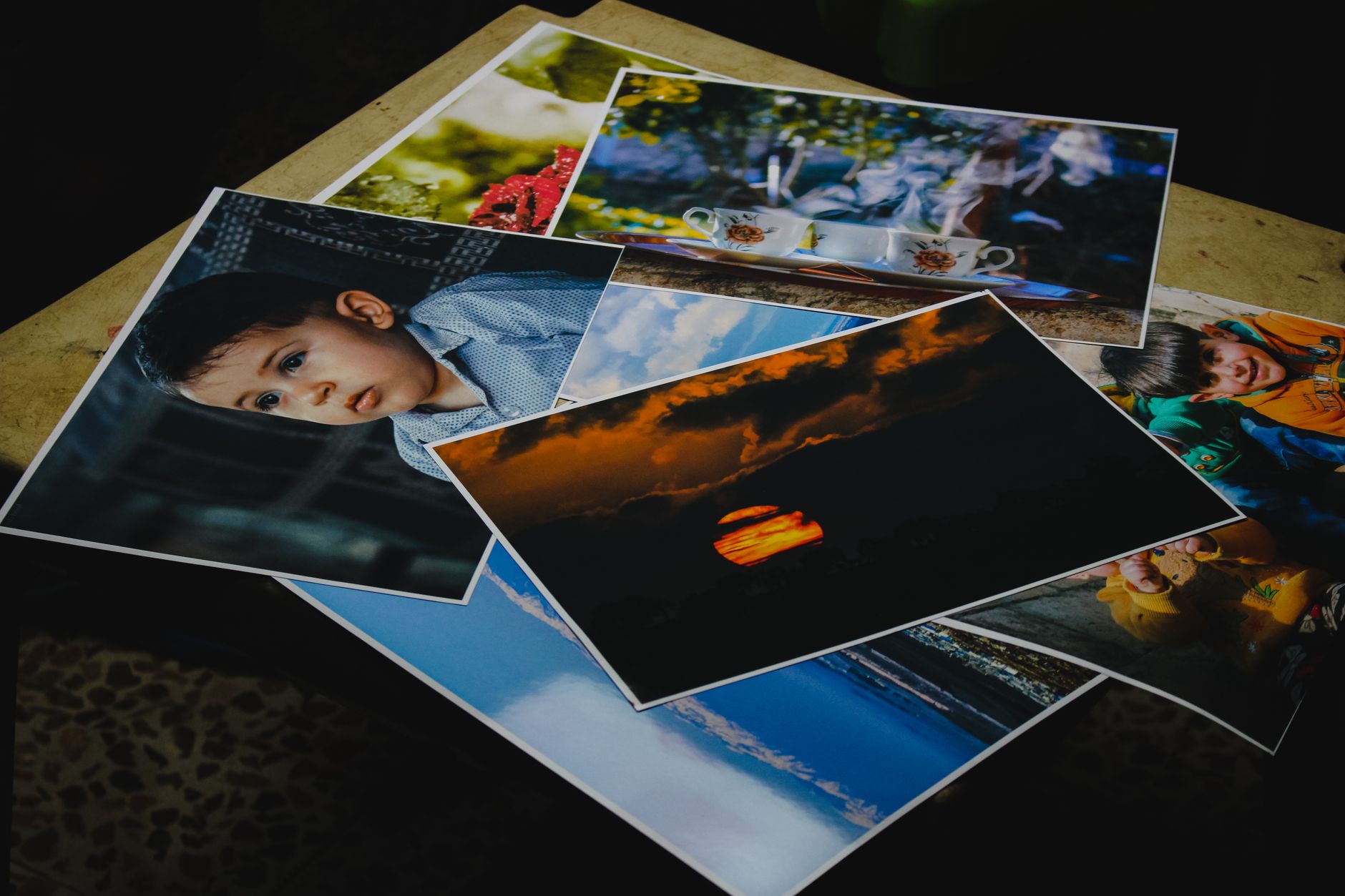
A submission portfolio is a short sequence of your strongest recent work, usually eight to fifteen images, each captioned with title, year, medium and dimensions. It travels with a CV, a statement or proposal, and sometimes a budget. Follow the call's own limits on pages and megabytes exactly, and never include prices or valuations.
What goes into an open call application?
Most applications are built from the same few documents in different proportions. A portfolio is a selection of images of your work with a caption for each. A CV lists your exhibitions, education, awards and residencies. An artist statement describes the work you make, and a project proposal, which residencies and grants ask for instead, describes what you intend to do with the time or money. Some calls add a budget or proof of where you live.
What changes from call to call is the length. Three residencies we checked for our calendar in September 2026 show the spread. Cité internationale des arts in Paris asked applicants to its In Situ programme for a CV of four pages, a letter of intent of four pages and a portfolio of fifteen. Its Art Explora programme, run from the same institution, wanted a portfolio of thirty pages, a CV of five and a project description of 3,500 characters. The Villa Medici in Rome asks for a proposal of at most ten pages and portfolio material under 20 MB.
So the first job is reading, before any making. Write down what this call allows: page count, file size, number of works, format and language. Those limits decide everything that follows.
How many images should a portfolio have?
As many as the call allows, and often fewer. Where no number is given, ten to twelve works shown well are read more generously than twenty shown small. Juries read in long sittings, and a tight sequence shows that you can edit your own work, which is part of what they are judging.
Juried exhibitions set harder limits. A juried exhibition is a show where a panel selects the work from open submissions. The annual exhibitions at Mall Galleries in London, run by societies such as the Royal Institute of Oil Painters and the Royal Society of British Artists, accept up to six submissions per artist, and each work has to meet the society's rules on medium and age before anyone looks at it.
Choose recent work unless the call says otherwise. Of the prizes in our calendar, several only accept work made in the last two, three or five years. A portfolio that leans on a strong piece from 2015 suggests that nothing since has been as good.
Sequence matters as much as selection. Open with the work that best represents what you are doing now, which is not always the one that sold. Keep a series together. End on something that holds its own, because the last image is the one still on the screen while the jury talks about you.
What should each caption say?
Every image needs a caption, and the conventional order is title, year, medium, dimensions. Dimensions go height before width before depth, in one unit throughout, and European calls almost always expect centimetres. For an edition, add the number: 3/25 means the third print of an edition of twenty five.
Harbour at Low Water, 2025, oil on linen, 120 × 90 cm
The caption is where a portfolio most often looks unfinished. A jury that reads "mixed media, approx. 1 m" on one page and exact measurements on the next sees a practice without a record. It is also usually the moment an artist realises she never measured the piece, and the canvas now hangs in somebody's living room.
If the call asks for separate image uploads, name the files to match the captions. Surname_Title_2025.jpg sorts cleanly in whatever folder the jury uses, and image four always matches caption four.
What file size and format do juries accept?
Exactly what the form states. Upload systems often reject a file that is too large without saying why, and they tend to do it an hour before the deadline. When a call gives a total, like the Villa Medici's 20 MB, it covers the whole bundle, not each image.
For images sent one by one, a JPEG of around 2,000 pixels on the long edge is a sound default: sharp on any screen, small enough to upload. For a PDF, one work per page with its caption underneath reads easily on a screen and survives being printed for a jury meeting. Reduce the images before you place them in the PDF. A portfolio built from camera originals can run to hundreds of megabytes.
Then open the finished file on a phone. If a detail you care about disappears there, it disappears for a juror reading on a train.
Is a portfolio for a grant different from one for an exhibition?
Yes, because it is asked to prove something else. An exhibition jury is choosing works. A grant or residency panel is choosing a person and a plan, so the portfolio becomes evidence that you can do what the proposal describes. If you are asking for time to develop large textile work, the portfolio should show that the textile work already exists and where it is heading.
The same archive therefore produces different portfolios. A painting prize might get your six strongest canvases. A research residency might get a series of studies, one finished piece and an installation view, in that order. National arts council grants often fund a period of development rather than a finished object, and tend to ask for fewer images and more words about why this is the right moment.
What should never be in a submission portfolio?
Prices, valuations and the names of people who own your work. A price on a caption makes the jury look at the number instead of the work. An insurance value is private information that cannot be recalled once it sits in a stranger's inbox. And the name of a collector who bought a piece is theirs to share, not yours.
Some sales exhibitions do need a price. The Royal Institute of Oil Painters requires every work in its annual exhibition to be for sale, at a minimum of £500. That figure belongs in the entry form, not on the image.
Leave out installation shots where the work is too small to read, and anything you would not want to make again.
How do you stop every application starting from zero?
Keep one record per work, made on the day it leaves the studio: a good photograph, title, year, medium, dimensions, and where it is now. With that in place a portfolio becomes a selection rather than a research project, and a deadline ten days away becomes an evening's work.
Keep the texts alive as well. A biography at 50, 150 and 300 words, a statement of around 500, a CV updated after each show rather than before each application. Log each application on one line: what you sent, where, when, and the answer. After a year you will know which kinds of call answer you.
Samlio was built for that record. Each work keeps its images with its measurements and materials, and a selection can be exported as a portfolio PDF, one work per page, carrying title, year, medium and dimensions and never a price or valuation. The open calls and residencies we track across Europe are at samlio.com/open-calls, each with its deadline, fee and source, and there is a longer guide to where to find open calls and residencies in Europe.
In short
- Read the call's limits first: page count, file size, number of works, format and language decide everything else.
- Where no number is given, ten to twelve works shown well beat twenty shown small.
- Caption every image with title, year, medium and dimensions, height before width before depth, in centimetres.
- A grant or residency portfolio proves you can carry out the proposal; an exhibition portfolio offers works to choose from.
- Never put prices, valuations or owners' names in a submission portfolio.
Questions people ask next
- How many pages should an artist portfolio be for an open call?
- Exactly what the call specifies. In the European calls we checked in September 2026, portfolio limits ranged from fifteen to thirty pages. Where no limit is given, ten to twelve works, one per page, is enough.
- Should the artist statement go inside the portfolio PDF?
- Only if the form has no separate place for it. Many online forms ask for the statement, CV and portfolio as separate uploads, and a jury moving between them expects to find each where the form put it.
- Can I use the same portfolio for every application?
- Keep one master selection and adjust it each time. A prize, a residency and a grant are judging different things, so the order and the choice of works should change even when the pool stays the same.
- Do I need professional photographs of my work?
- No, but they need to be good. Even daylight without direct sun, the camera square to the surface, the whole work in frame with a small margin, and no reflection from glass. A phone can do this; a dark or skewed image cannot be rescued by the jury's goodwill.
- Should I include work that has already been sold?
- Yes, if it represents what you do now. The caption does not need to say it is sold, and it should never say who bought it.
Sources
- Cité internationale des arts, In Situ residency, Application requirements for the 2027 call, checked September 2026.
- Cité internationale des arts, Art Explora residency, Portfolio, CV and project description limits, checked September 2026.
- Villa Medici, Fellows annual selection, Proposal of at most ten pages and portfolio material under 20 MB.
- Mall Galleries, Royal Institute of Oil Painters open call, Up to six works, completed within three years, for sale at a minimum of £500.
- Mall Galleries, Royal Society of British Artists open call, Up to six submissions, up to four selected.
- LOEWE Foundation Craft Prize, Eligibility limited to work made in the last five years.
Before the next deadline
Collected, every other Tuesday: the open calls, residencies and grants closing next, and one thing to do the same evening. Unsubscribe in one click.
Written for Collected, the publication of Samlio, where artists and collectors keep a record of their work.